
Economy
Resignation of CMS Audit Chief raises fresh questions over phosphate project governance
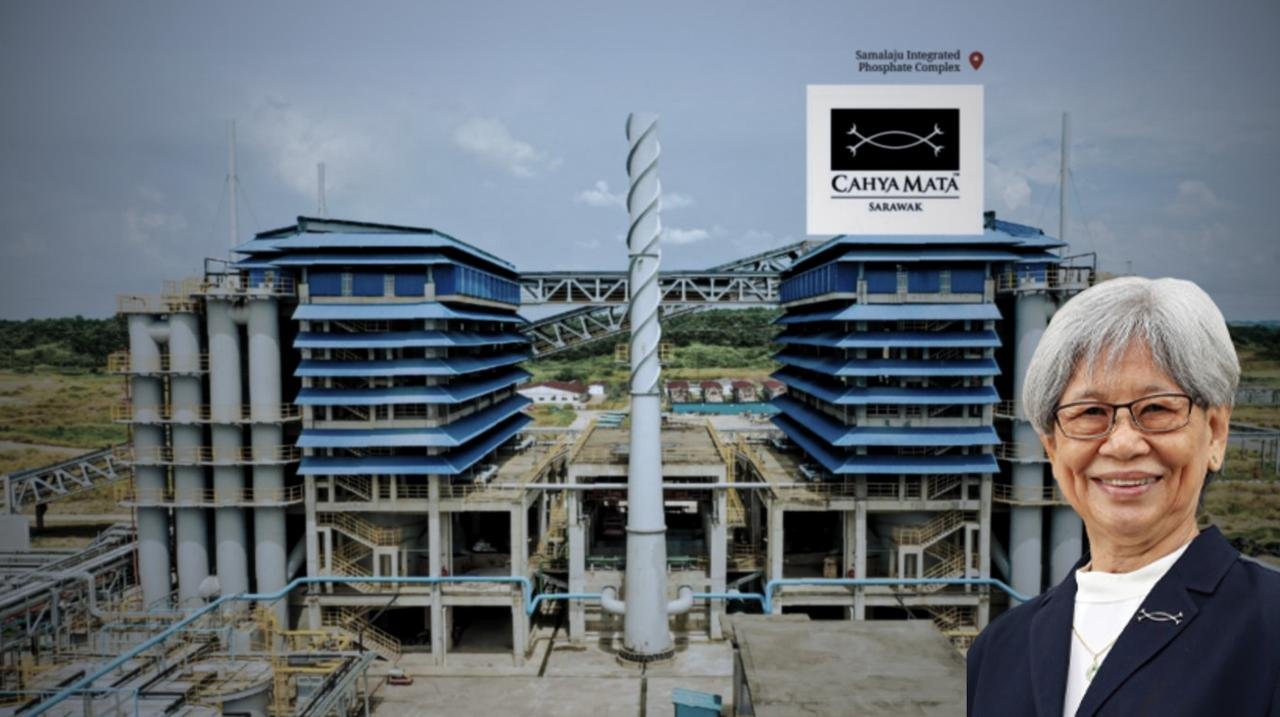
KUALA LUMPUR - The resignation of Cahya Mata Sarawak Berhad (CMS) independent non-executive director and Group Audit Committee Chairman Gee Siew Yoong has raised fresh questions over the governance and oversight of the company’s troubled phosphate project.
Gee, 76, resigned from her position with effect from September 18, according to a company announcement.
The filing cited “personal reasons” for her resignation and stated that she had no disagreement with the board, with no matters requiring shareholders’ attention.
Her departure also means she has ceased to be chairman of the Group Audit Committee, a position she held while also serving as chairman of Cahya Mata Phosphates Industries Sdn Bhd, the subsidiary at the centre of CMS’s long-running phosphate venture.
CMS’s corporate profile had previously identified Gee as both Group Audit Committee chairman and chairman of Cahya Mata Phosphates Industries.
The timing is significant as the phosphate project was the subject of a recent APHD investigative report, which examined the repeated delays, accumulated losses, financial exposures and governance questions surrounding the Samalaju facility.
In the report, Loji Fosfat CMS: Adakah Projek Strategik Tergendala Menjadi Isu Akauntabiliti Awam?, APHD reported that the planned commercialisation of yellow phosphorus had again been delayed, this time from September to the fourth quarter of 2026, following mechanical problems encountered during testing and commissioning.
The project has already experienced years of delays, including a prolonged interruption to electricity supply, while the phosphate subsidiary accumulated losses of about RM535 million by the end of 2025 and a further RM45 million loss in the first half of 2026, bringing cumulative losses to about RM580 million.
Against that backdrop, the change at the top of the audit oversight structure assumes particular significance.
The central governance question, however, is not that Gee’s resignation establishes any wrongdoing. The company’s filing expressly stated that there was no disagreement with the board.
Rather, the issue is whether the board’s governance structure provided sufficient separation between operational responsibility for the phosphate subsidiary and independent oversight of the group’s financial reporting and controls.
Gee’s dual roles meant that the same independent director chaired the Group Audit Committee while also chairing the phosphate subsidiary whose financial performance and project execution were attracting increasing scrutiny.
APHD’s earlier investigation highlighted this overlap and questioned whether the arrangement provided adequate segregation between operational involvement and audit oversight.
The distinction is important, as there is no evidence in the resignation announcement that Gee was accused of misconduct, nor does the announcement identify any dispute with the board.
Nevertheless, the governance gap remains a question for the current board to address.
In particular, the board will now have to explain how audit and internal control reporting relating to the phosphate business was independently reviewed when the chairman of the Group Audit Committee also chaired the phosphate subsidiary.
The concern becomes more pronounced if reports concerning the subsidiary were presented to, reviewed by or approved through a committee chaired by the same person responsible for the subsidiary.
The available public disclosures do not establish that Gee personally approved her own audit reports, and that distinction should be maintained. However, the matter could be subject to future scrutiny by authorities and shareholders alike.
It is also unclear whether the resignation is related to the ongoing case at the High Court of Kuching, which was reported by The Borneo Post, involving Dato Sri Mahmud, who is both a shareholder and director.
In March 2025, Mahmud filed an originating summons seeking statutory inspection of CMS’s books and operational records.
The filing targeted CMS alongside five principal operating subsidiaries — Cahya Mata Phosphates Industries Sdn Bhd, Cahya Mata Cement Sdn Bhd, Oiltools International Sdn Bhd, Cahya Mata Oiltools Sdn Bhd and Cahya Mata Professionals Sdn Bhd.
CMS’s latest financial performance provides an additional backdrop to the developments.
Its share price stood at RM1.02 at the close of trading on September 18, down from around RM1.26 a year earlier.
With continuing uncertainty surrounding the phosphate project, the venture remains one of CMS’s largest outstanding operational and governance questions.
The matter also carries a wider public interest dimension because institutional shareholders in CMS include Lembaga Tabung Haji and Urusharta Jamaah (UJSB), the latter being wholly owned by Minister of Finance Incorporated, according to public reports.
As of September 19, no public response from the relevant authorities addressing the latest resignation or the broader governance questions surrounding the phosphate project had been identified.
The next steps by the CMS board, including the appointment of a new Group Audit Committee chairman, are therefore likely to attract close attention from shareholders and other stakeholders.
According to the company’s announcement, a new head of internal audit will also be appointed within three months, in line with the terms of reference for the committee, which reports directly to the board.
What's your reaction?
0

AWESOME!
0

LOVED
1

NICE
0

LOL
0

FUNNY
0

EW!
0

OMG!
0

FAIL!
Popular News

Recent News
Comments
Leave a Reply